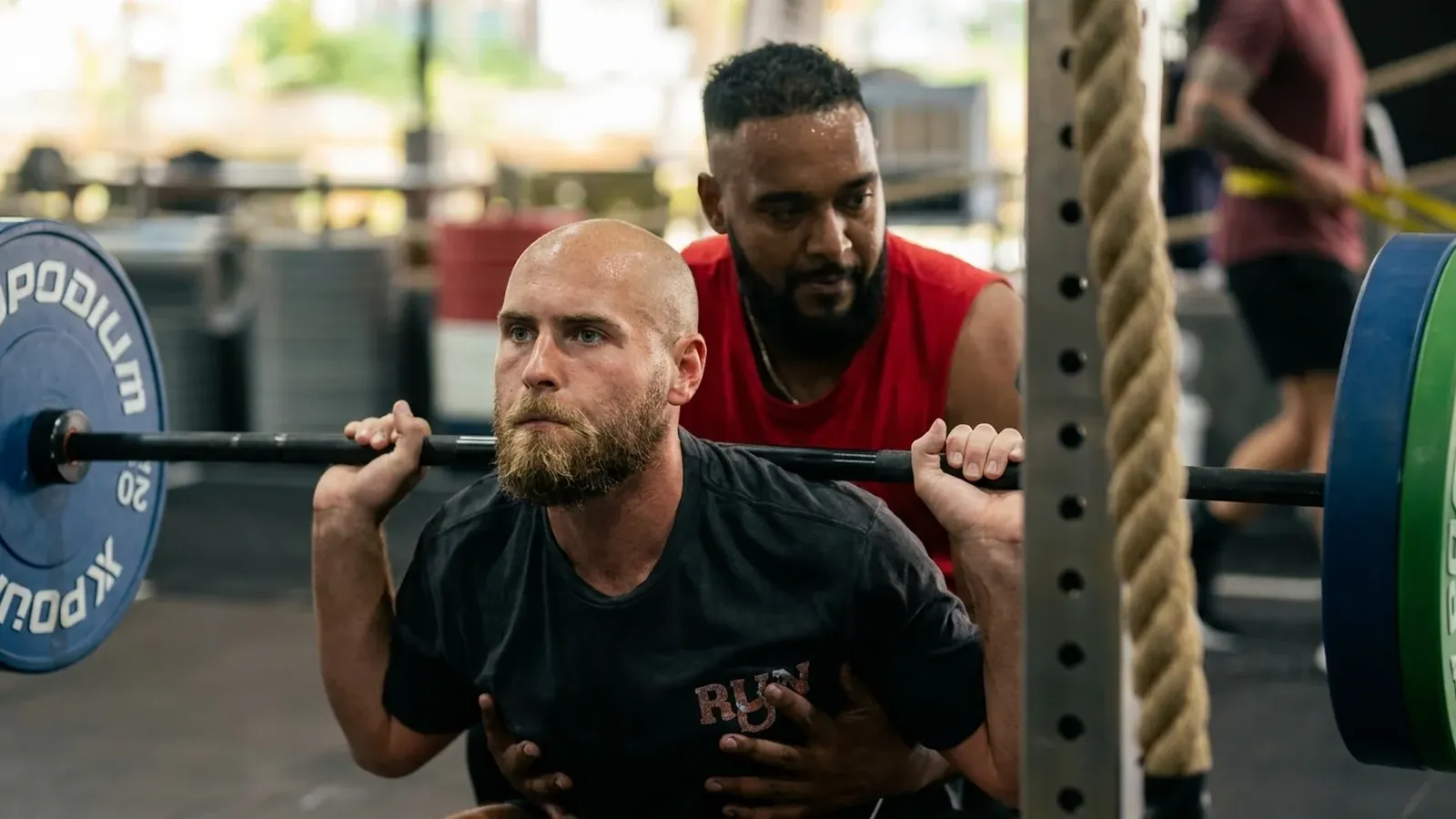
A bootcamp is built to make you tired. That is a much easier thing to sell than making you better, because tired you can feel by lunchtime.
The problem is that exhaustion and adaptation are not the same thing. Confuse the two and you can come home from a fitness holiday sore, a little smaller in the mirror for a fortnight, and back where you started soon after.
If you are comparing a bootcamp-style holiday with a coached, personal-training-led retreat, you are really asking one question: is paying for supervision worth it, or is an option that just smashes you for a week good enough?
Here is the honest answer, mechanism first, before anyone tries to sell you anything.
A bootcamp is built to exhaust you. Changing your body is a different job
You can measure a bootcamp by how wrecked you feel at the end of it. That is the wrong measure.
The things that decide whether a few weeks changes your body are correct load, clean technique, a plan fitted to you and skill you keep. All of them are invisible in the moment. None of them show up in how much you sweat. And all of them depend on one thing a crowd cannot give you: attention.
Why is supervision the variable that moves the needle?
Take two groups running the same programme. One trains under a coach who watches every set. The other trains alone.
In a 12-week randomised study, moderately trained men who trained under direct supervision used significantly heavier training loads and gained significantly more squat and bench press strength than a matched group training unsupervised, on the same periodised plan. The variable that separated them was not effort. It was someone being there to load them correctly and hold the standard.
That is not one odd result. An exploratory systematic review and meta-analysis found supervised resistance training produced a moderate benefit for strength compared with unsupervised training, with a standardised effect size of 0.40.
Left to ourselves, many of us undershoot the effort that actually drives change, overshoot into sloppy, and guess at the weight. A coach removes the guesswork.
Can one plan fit every body in the room?
The bootcamp gives everyone the same session. That feels fair. It is not.
Even on a fixed programme, people respond very differently. In a 2022 trial with 30 recreational runners, some runners on the predefined plan barely improved at all. The runners whose training was adjusted to their recovery cut their 10km time by 6.2%, against 2.9% for the fixed plan, and the authors concluded that individualising the training made a high response more likely and a low response less likely.
A 55-year-old with a sore shoulder and a 30-year-old former rugby player cannot be served by the same circuit. One needs a regression and a substitution. The other needs more load. In a crowd, both get the average, and the average fits neither.
Progressive overload only works when someone is steering it
Muscle and strength are driven by training with a high degree of effort and by progressively overloading over time, which you can achieve by adding load or adding repetitions, not by inventing more punishing ways to be exhausted.
That is a steering job. Add too much, too fast, and technique breaks. Add nothing, and you plateau. A coach tracks where you were last session and decides the next step on the spot. That single decision, repeated across weeks, is much of the difference between a hard week and a changed body.
The injuries you avoid are the progress you keep
Nothing stalls a transformation faster than three weeks off with a tweaked back.
The most common resistance-training injuries come down to improper technique, excessive loading and insufficient recovery, and prevention centres on correct technique under professional supervision and managed progressive overload.
To be clear, no coach and no programme can promise injury-free training, and anyone who tells you otherwise is selling. But look at that list again. Technique, load, recovery: the three things a coach manages on purpose. Recovery being scheduled is part of the same equation, which is why we treat ice baths and sauna as programmed sessions.
The real product is the skill you take home
Feedback from an external source, the kind a coach gives you while you move, improves motor skill learning, and feedback that combines what you see, hear and feel tends to be retained longer than a single cue on its own.
In plain English: if someone corrects your hinge, your squat depth and your bracing while you do them, you can eventually do them well on your own. You walk away owning the movement. That is how a 15kg body recomposition becomes a set of habits rather than a holiday photo.
Accountability is why you still turn up in week three
Motivation gets you to day two. Something else gets you to week three.
In a study of 49 women in a clinical exercise group, those who felt they could rely on the support around them attended more classes and were less likely to drop out. A coach who knows your name and a small group that notices when you are missing are not soft extras. They are how adherence happens, and adherence is what compounds into a result.
When is a bootcamp the right call?
If all you want is to be smashed for a week, to sweat hard and feel virtuous, and you do not mind whether any of it lasts past the flight home, a bootcamp can deliver exactly that.
But if you have reached a turning point and you want the change to still be there in six months, intensity alone will not carry it. You need supervision, a plan built around you, load that is actually steered and skill you keep.
How does Prime Revive build this into every session?
Everything above is why Prime Revive, a fitness retreat in Phuket, is coached rather than run like a bootcamp.
There is one coach for every four guests, and a coach attends every session to demonstrate movements, correct your form and make substitutions or regressions where you need them, whether you are working around an injury, a limitation or simply refining technique.
Your week is coached, not just filled: two personal training sessions, strength and high-intensity classes, a beach workout and the weekly Big Buddha hike, plus one optional Muay Thai session. Progress is tracked with a 3D body scan every week and a review with your coach, so the plan follows the trend across your stay rather than a guess.
The most common stay is 4 weeks, on Fitness Street in Chalong, and the same coached programme runs at every accommodation option. It works across ages and starting points, from first-timers to a 64-year-old guest who trained alongside everyone else.
Which one are you actually booking?
You are not really choosing between hard and easy. Both will make you tired.
You are choosing between a week you survive and a change you keep. If you want the second one, see how the programme is built and what a stay costs, or apply here and tell us where you are starting from. If a bootcamp is genuinely what you are after, no hard feelings. Book that instead.
Questions people ask
Is supervised training better than training alone?
In a 12-week randomised study, men who trained under direct supervision used heavier loads and gained more squat and bench press strength than men following the same plan alone. A meta-analysis found a moderate strength benefit for supervised training, with an effect size of 0.40.
Is a fitness bootcamp worth it?
If you only want a hard week of exercise, a bootcamp can deliver that. If you want a change that lasts, look for supervision, a plan built around you, load that is steered over time and skills you can repeat at home.
What is the coach ratio at Prime Revive?
There is one coach for every four guests, and a coach attends every training session to correct form, adjust loads and work around injuries.
Sources
- The influence of direct supervision of resistance training on strength performance (Mazzetti et al., 2000), Medicine and Science in Sports and Exercise
- The role of supervision in resistance training: an exploratory systematic review and meta-analysis (Fisher et al., 2022), International Journal of Strength and Conditioning
- Individualized endurance training based on recovery and training status in recreational runners (Nuuttila et al., 2022), Medicine and Science in Sports and Exercise
- Progressive overload without progressing load? (Plotkin et al., 2022), PeerJ
- Resistance training injuries: mechanisms and prevention (review, 2025), PubMed Central
- Augmented feedback and motor learning (systematic review, 2021), PubMed Central
- Examining the role of social support and group cohesion in exercise compliance (Fraser and Spink, 2002), Journal of Behavioral Medicine
How this article was made: written with AI assistance from Prime Revive guest video interviews and the published research listed above. Every fact links to its source, and guest quotes are word for word from their interviews.